
Quick answer
The two-night voyage includes overnight mooring at protected anchorages, full-day sailing through the Whitsunday Passage, snorkeling at fringing reefs, and a scheduled stop at Whitehaven Beach. Arriving during the 07:30–08:30 window ensures calm boarding conditions and first choice of cabin configuration before departure.
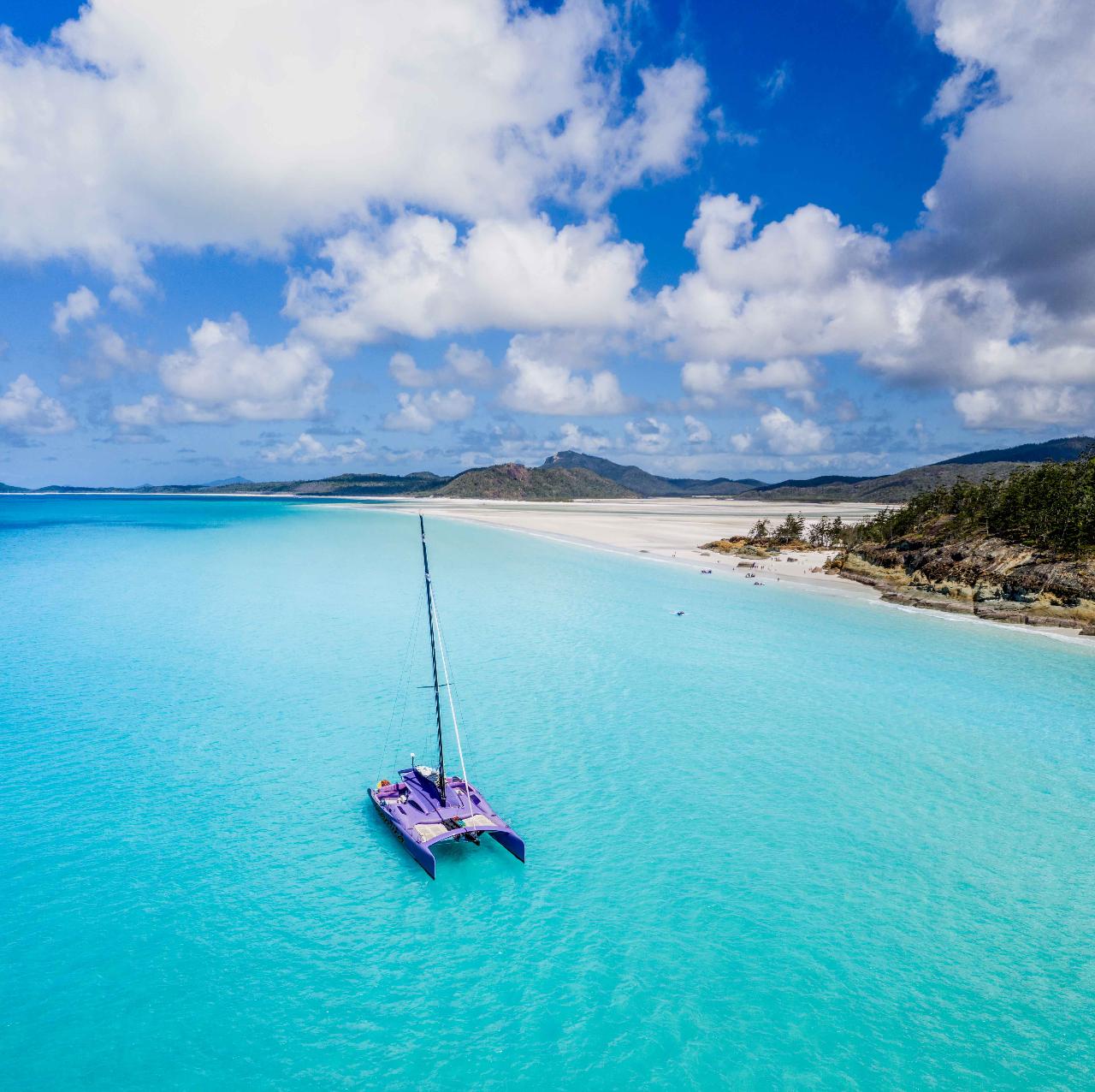
More than 70 bareboat and crewed catamarans operate two-night circuits through the Whitsunday Islands, yet fewer than half publish their exact departure protocols. A catamaran Whitsundays 2 nights itinerary follows a structured route: Day One departs mid-morning and sails north through the Whitsunday Passage, anchoring at Tongue Bay or Chalkie's Beach by mid-afternoon. Day Two covers the eastern islands, with a morning snorkel at Blue Pearl Bay or Luncheon Bay and an afternoon landing at Whitehaven's northern end, followed by an overnight mooring at Cid Harbour or Chance Bay. The overnight catamaran sailing format eliminates the return commute that day-trip vessels require, allowing deeper exploration of Hill Inlet, Hook Island's fringing coral, and the sheltered bays that fast boats skip. The Whitsundays' protected position inside the Great Barrier Reef Marine Park means year-round navigability, though winter trades—June through August—deliver the steadiest winds and coolest cabin temperatures. Summer's humid calm favors snorkeling visibility but increases the likelihood of afternoon squalls. Arriving during the recommended 07:30–08:30 check-in window positions you ahead of the mid-morning rush and ensures access to forward cabins, which experience less engine vibration during overnight anchoring. Two-night charters include all meals, snorkel equipment, and guided reef briefings, but cabins vary by vessel—some catamarans house guests in double berths with shared heads, while others offer ensuite configurations. The multi-day format also means limited luggage capacity; soft-sided bags under 15 kilograms fit the typical below-deck locker, and charter operators recommend reef-safe sunscreen to meet Marine Park Authority standards. The absence of an entrance fee reflects the charter model—the cost covers the vessel, crew, provisions, and Marine Park permits, not a ticketed attraction.
“The overnight catamaran sailing format eliminates the return commute that day-trip vessels require, allowing deeper exploration of Hill Inlet, Hook Island's fringing coral, and the sheltered bays that fast boats skip.”
Typical Itinerary for Catamaran Whitsundays 2 Nights
Check in between 07:30–08:30 for cabin allocation, then cast off mid-morning and sail north toward Hook Island.
Snorkel at Luncheon Bay
Anchor in a sheltered bay on Hook Island for your first snorkel over fringing coral, typically 60–90 minutes in the water.
Overnight at Butterfly Bay
Motor into a calm anchorage on the northern side of Hook Island, dinner on deck and night swim optional.
Whitehaven Beach visit
Sail south to Whitehaven, arriving mid-morning to walk the seven-kilometre silica sand beach and climb to Hill Inlet lookout.
Snorkel the fringing reef
Relocate to a nearby reef site—often Mantaray Bay or Border Island—for a second snorkel session before sunset.
Anchor near Whitsunday Island
Overnight in a protected bay on the western shore, final group dinner on board.
Return sail to Airlie Beach
Best Time of Year for Catamaran Whitsundays 2 Nights
The period from September to November offers the most favorable conditions for a 2-night catamaran trip, balancing stable winds with warm water temperatures. This window avoids the peak summer humidity and the stronger winds occasionally experienced during winter months.
September–November
Moderate crowdsDry, 24°C–29°C; ideal sailing winds
Stable weather conditions provide predictable sailing and clear visibility for snorkeling activities.
December–March
High crowdsHumid, 25°C–31°C; chance of storms
Warmer waters suit water-based activities, though travelers should monitor weather reports for tropical rain patterns.
April–August
Moderate crowdsCooler, 18°C–24°C; potential for trade winds
While water temperatures are lower, the air is crisp and comfortable for those who prefer avoiding summer heat.
Verdict: For the most consistent sailing conditions, aim for a departure between September and November, ensuring you arrive during the 07:30–08:30 window for boarding.
Checklist for Your Catamaran Whitsundays 2 Nights Trip
Pack light and smart for three days aboard a catamaran in the Whitsundays.
-
Bring reef-safe sunscreen (SPF 50+) — Chemical sunscreen damages the Great Barrier Reef and is discouraged in marine parks.
-
Pack clothes in a soft bag — Hard-shell luggage doesn't fit in compact cabin storage on catamarans.
-
Carry valid photo ID and booking confirmation
-
Include a rashguard or stinger suit — Provides sun protection and shields against jellyfish during water activities.
-
Pack seasickness medication if prone to motion — Overnight sailing can trigger nausea even in calm Whitsunday waters.
-
Bring a reusable water bottle — Reduces plastic waste and most catamarans offer filtered water refills onboard.
-
Include a waterproof phone case or dry bag — Protects electronics during snorkeling, swimming, and tender transfers to beaches.
Check availability
Frequently Asked Questions: Catamaran Whitsundays 2 Nights
Everything you need to know about catamaran whitsundays 2 nights